Atrial Septal Defect (ASD) – a Congenital Heart Disease
A brief overview
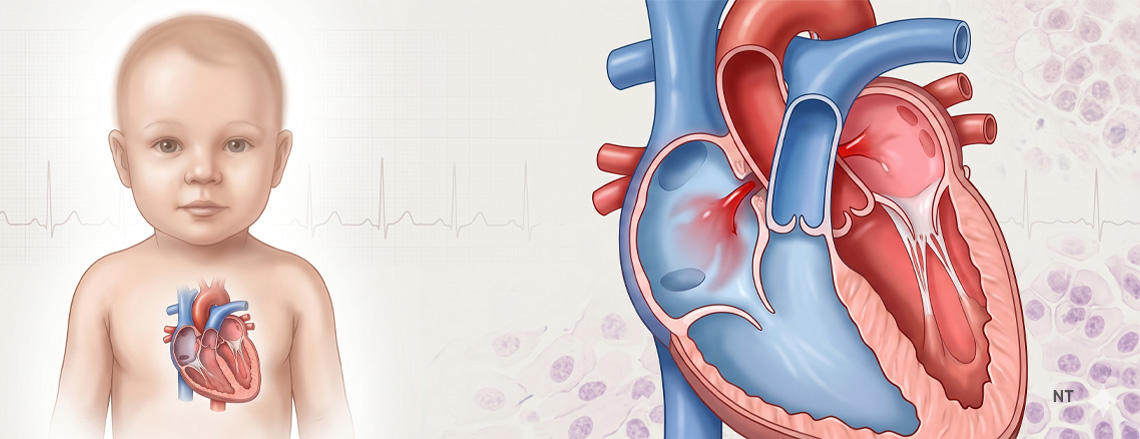
Congenital heart disease (CHD) refers to structural abnormalities of the heart present at birth. Among these, Atrial Septal Defect (ASD) is one of the most common and often less severe forms. In this condition there is a hole in the septum (wall) that separates the two upper chambers of the heart - the right and left atria.
Understanding ASD
Let’s first try and understand the condition better. In a normal heart, the atrial septum prevents oxygen-rich blood from the left atrium mixing with oxygen-poor blood in the right atrium. But in ASD, this wall has an opening, allowing blood to flow between the atria. Typically, oxygenated blood from the left atrium passes into the right atrium, increasing the volume of blood flowing to the lungs.
ASDs can vary in size and type. The most common type is ostium secundum ASD, located in the middle of the atrial septum. Smaller defects may close on their own during infancy or early childhood, while larger ones may persist and require medical intervention.
Causes and Risk Factors
Unfortunately, the exact cause of ASD is not always known. It develops during foetal heart formation and may be linked to genetic factors or environmental influences during pregnancy, such as maternal infections, uncontrolled diabetes or exposure to certain medications or substances.
What are the symptoms of ASD?
It is to be noted that many children with small ASDs remain asymptomatic and are often diagnosed incidentally during routine check-ups. However, larger defects can lead to noticeable symptoms, including:
- Frequent respiratory infections
- Fatigue or shortness of breath, especially during activity
- Poor growth in infants
- Heart murmurs detected during examination
In adults, untreated ASD may lead to complications such as arrhythmias, pulmonary hypertension or even heart failure over time.
Diagnosis
ASD is commonly diagnosed using imaging techniques such as echocardiography, which provides detailed pictures of the heart’s structure and blood flow. Other tests like ECG, chest X-ray, or cardiac MRI may also be used to assess the condition and its impact.
What treatment options are available?
The management of ASD depends on the size of the defect and the severity of symptoms. These may include:
- Observation: Small ASDs may close spontaneously and only require periodic monitoring.
- Medications: While medications cannot close the defect, they may help manage symptoms or complications like irregular heart rhythms.
- Interventional Procedures: Many ASDs can be closed using a minimally invasive catheter-based procedure, where a device is placed to seal the hole.
- Surgery: In cases where catheter closure is not feasible, open-heart surgery may be required.
With timely diagnosis and appropriate treatment, the prognosis for individuals with ASD is excellent. Most children who undergo closure procedures lead normal, healthy lives. Early intervention helps prevent long-term complications.
How can one prevent ASD?
Unfortunately, not all cases of ASD can be prevented. However, maintaining good maternal health during pregnancy through proper nutrition, vaccination, and avoidance of harmful substances can reduce the risk of congenital heart defects. Regular paediatric check-ups are essential for early detection.
To sum up, Atrial Septal Defect is a manageable congenital heart condition. Awareness, early diagnosis, and appropriate care play a crucial role in ensuring positive outcomes for affected individuals.